


2009 Alumni Spotlight: Hillary Fishler
Published October 21, 2026 by Christopher Toth
Current Job Title
R&D Scientist in Critical Infrastructure Resilience
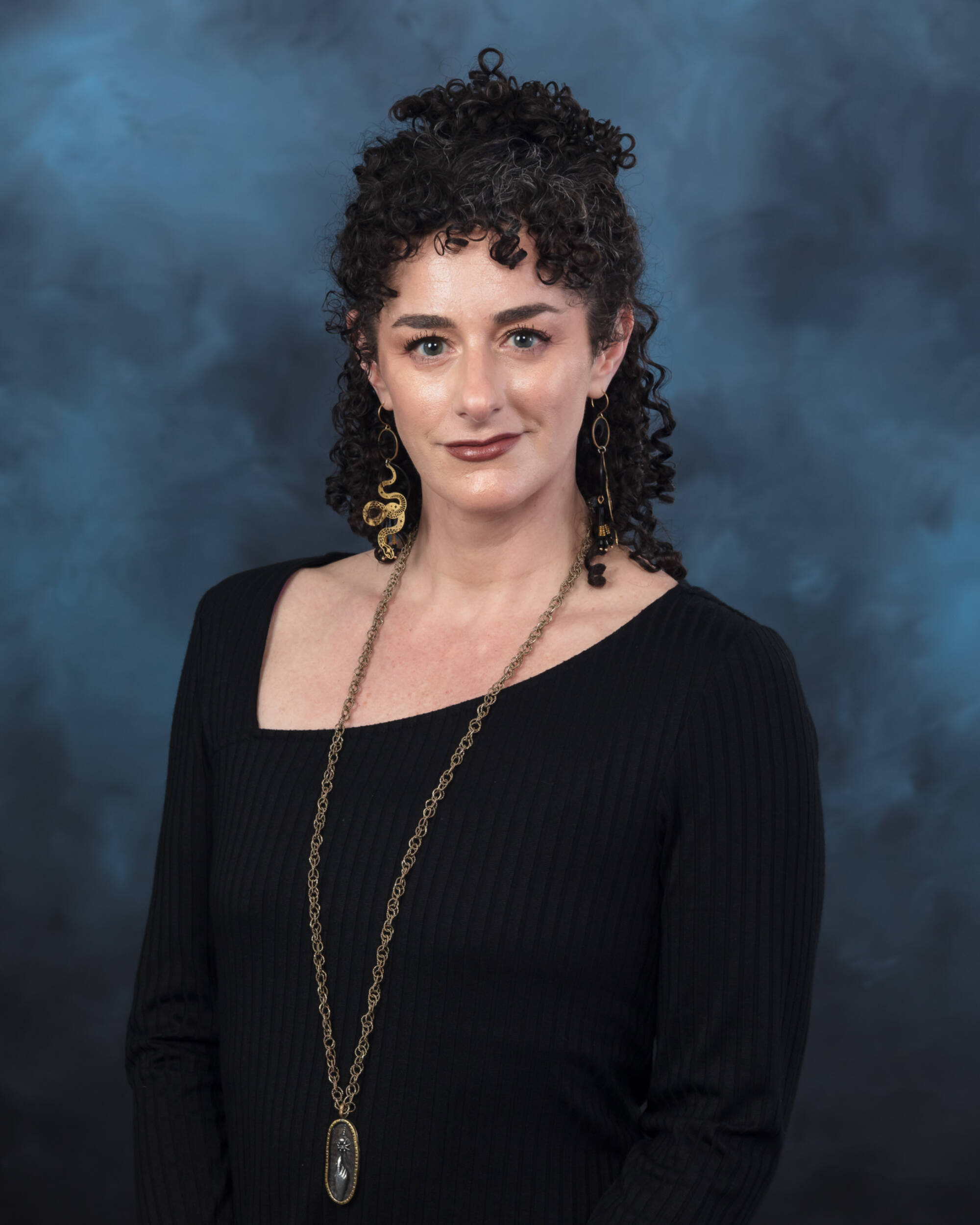
Describe your current position
I am a mixed-methodologies researcher in the Critical Infrastructure Resilience group at Oak Ridge National Laboratory. I focus primarily on understanding the impacts of land use, hazards, vegetation, etc. on the reliability of the electric grid--particularly as it impacts rural, tribal, and poor communities. I also perform cyber risk assessment and data security and management for critical infrastructure data. I combine subject matter expertise in social science and environmental policy, institutional analysis and design, wildland fire ecology, land use ecology and vegetation management, econometrics, and mixed-methods coupled-human systems analysis.
To what extent does writing relate to your current position? What type of writing/design do you do for work?
Storytelling through writing and presenting is nearly my whole job. My organization consists mainly of computer scientists, statisticians, software developers, and engineers by training. If you've had the distinct pleasure of reading an engineering textbook, you might find it lacks a cohesive narrative regarding why one might complete the homework problems within, void of its real-world application. In my job, there is always a big push to automate reports, presentations, anything. But, because we do a lot of connecting and outreach to different types of stakeholders, the ability to write and connect to what is truly important to them is critical.
There is a great need to be able to explain the science within the context, to evoke an emotion or a memory (think: the food critic's first bite in 2007's Pixar classic film, Ratatouille), to latch on to their personhood and pull on that thread. The writing, in that way, is creative non-fiction in a sense, blending science with the study of a context, a setting. Reading and (heavily) revising reports, journal articles, proposals, presentations is what I began doing when I realized that folks were having a hard time communicating science and its applications to a larger audience than those in their discipline. Writing, quite frankly, can be a superpower in these spaces.
Please describe your path from graduation at GVSU to your current position.
- 2012: Master of Public Policy (MPP), Environmental Economics & Policy, Oregon State Univ. 2017: PhD, Environmental Science, Social Science & Policy, Oregon State University
- 2013 - 2018: Field Research, USDA Forest Service Pacific Northwest Research Station, USDA Forest Service Northern Research Station, Oregon State University, and University of Wisconsin- Madison Joint Fire Sciences Project
- 2016 - 2018 Oregon Research Fellow in Emergency Management, USDA Forest Service
- 2018 - 2019: Research Fellow, Department of Civil & Environmental Engineering, Utah State University, Logan, Utah
- 2020 - 2023 Program Manager, Education and User Facilities Programs, Center for Advanced Energy Studies, Idaho National Laboratory, Idaho Falls, ID
- 2021 - 2024 Graduate Faculty, Micron School of Materials Science and Engineering, Boise State University, Boise, ID
- 2023 - 2024 Senior Consultant, Office of the Laboratory Director, Oak Ridge National Laboratory, Oak Ridge, TN
- 2024 - Present: R&D Staff Scientist, Critical Infrastructure Resilience, Oak Ridge National Laboratory, Oak Ridge, TN. Lead for Utility Outreach & Partnerships, Lead for Data Governance, Management, and National Security; Lead for Tribal Utility and Community Engagement; Technical Lead for State Engagement: Mississippi, Oregon, Washington, Alaska, Hawaii, Kentucky, North Carolina, Florida
What parts of the writing major had the strongest impact on you as a professional?
Honestly, Chris Haven's Writing with Style class, which has been expanded to an entire module, has been the course that stuck with me the most throughout my journey to 2026. I was probably too young to truly appreciate its value at the time, but I find myself often returning to the Ben Yagoda's The Sound on the Page. I was and have always been obsessed with how the setting of a story, poem, etc. is the determinant of the characters, their experiences, how they interact, what they value, what they see. We find this everywhere, of course. My mentor, the poet Patricia Clark, taught me to slow down and observe before beginning the writing process.
What advice would you offer to current/future writing majors at Grand Valley?
Writing is a yoga - it is a practice. Both writing and yoga are practices of observation and reflection. It is okay to take a meandering path, to not have anything to write about. Read things you don't think you'll like, visit places that seem boring, do things that seem pointless. All of these are worth doing and will give you more information about the people, emotions, settings, and whatever you're writing about.